
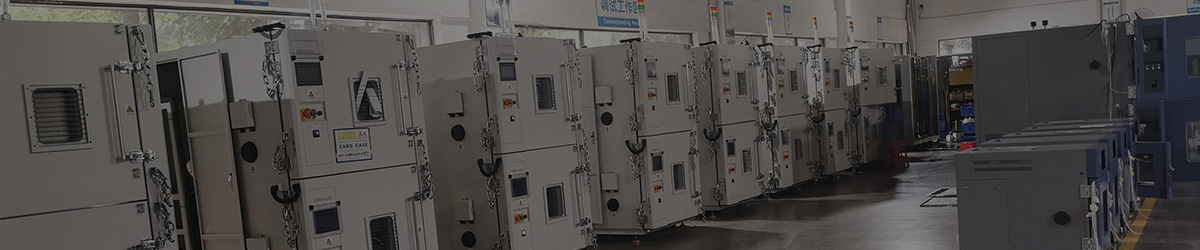
Environmental test chambers are core equipment in new energy, semiconductor and other industries. The accuracy of their temperature and humidity adjustment directly affects test data reliability. Irregular operations often cause data deviation, misleading product R&D and quality judgment. This article summarizes key adjustment skills to help avoid misunderstandings and ensure data accuracy.
I. Core Principle: Adjust Step-by-Step, Avoid Hasty Operations
Temperature and humidity changes have a lag; hasty adjustments easily cause overshoot and fluctuations. Focus on three key links: pre-adjustment calibration, dynamic adjustment, and detailed protection.
(1) Before Adjustment: Pre-calibrate to Ensure Stability
Confirm the temperature and humidity sensor is calibrated within 6 months (adjust or replace if deviated). Set target parameters, pre-run for at least 30 minutes to balance the internal environment. Check door seals, clean debris and ensure unobstructed air ducts to avoid interference.
(2) During Adjustment: Gradient Operation for Precision
Temperature: For large gaps (e.g., 25℃ to -40℃/60℃), use gradient adjustment—approach the target in stages (stabilize 10-15 minutes each stage). For gaps ≤10℃, set directly and monitor fluctuations.
Humidity: Follow “temperature first, then humidity”. For high-temperature/high-humidity environments, stabilize temperature first, then increase humidity gradually (5%-10%RH each time, stabilize 5-10 minutes). For low-temperature/low-humidity, stabilize temperature first to prevent frosting. Ensure the humidity generator has sufficient water and uniform atomization.
(3) After Adjustment: Monitor Continuously to Prevent Interference
After reaching target values, monitor for 15-20 minutes (ensure fluctuations: temperature ≤±0.5℃, humidity ≤±2%RH) before placing samples. Minimize door opening (≤30 seconds each time) and keep the equipment in a well-ventilated area, away from air conditioners, heat and water sources.
II. Common Misunderstandings & Solutions
Misunderstanding 1: Ignoring Sensor Calibration
Long-term use causes sensor deviation. Solution: Calibrate every 6 months; check against standard thermometers/hygrometers before testing.
Misunderstanding 2: Synchronous Temperature & Humidity Adjustment
Synchronous adjustment causes interference. Solution: Follow “temperature first, then humidity” and prioritize accuracy over speed.
Misunderstanding 3: Frequent Door Opening
Frequent opening disrupts stability. Solution: Prepare in advance; wait 5-10 minutes to re-stabilize after opening.
Misunderstanding 4: Neglecting Equipment Maintenance
Dust reduces performance. Solution: Clean air ducts/sensors weekly; check the humidity generator and heating tube monthly.
III. Key Takeaways for Accurate Adjustment
1. Calibrate first to eliminate equipment errors; 2. Adjust step-by-step without haste; 3. Control details (minimize door opening, maintain stable surroundings, and perform regular maintenance).
In short, accurate, standardized adjustment ensures reliable test data, providing strong support for product R&D and quality inspection.
Post time: Mar-23-2026