
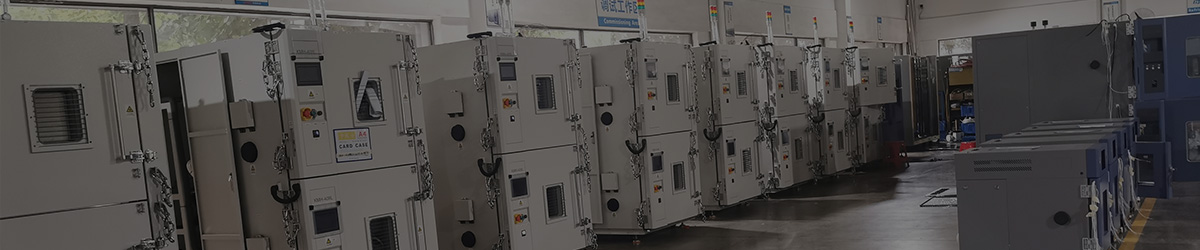
Automotive electronics labs often hit the same bottleneck: a long damp-heat run occupies the only chamber, and temperature-cycling projects queue behind it. Extra volume does not fix a delay caused by profiles that cannot share one workspace.
ISO 16750-4:2023 ties climatic test severities to where the component sits in the vehicle — an engine-bay ECU, a wheel-arch sensor and a cabin display do not run the same profile. For steady damp heat it points to IEC 60068-2-78:2025, which defines constant-temperature, non-condensing exposure; a test written to produce condensation is a different method and should not be substituted for it.
Chamber selection should look past temperature range and inner volume. Sample dimensions, powered-on heat dissipation, fixture layout and cabling all change what a chamber has to deliver. Chamber air ramp rate is not the rate the specimen follows, and a thermal shock transfer is not reproduced by a standard temperature-humidity chamber. Where damp heat, temperature cycling and R&D validation must run in parallel, separate units are the practical answer — a workload decision, not a standard requirement.
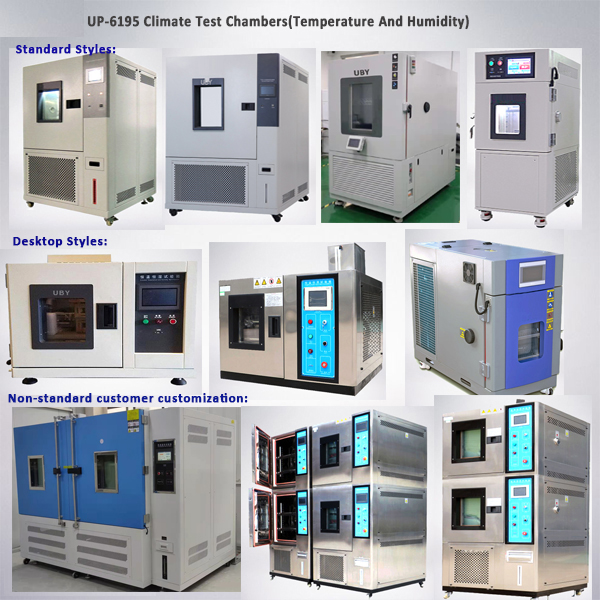
YOUBI supplies the UP-6195 single-box temperature-humidity chamber, UP-6118 two-zone thermal shock chamber, UP-6124 accelerated temperature-humidity stress chamber, UP-6197 salt spray chamber (ISO 9227 / ASTM B117), UP-6200 UV weathering chamber and UP-6316 dust chamber for IP5X / IP6X. Each unit is built to the test profile named in the purchase order, not to generic default parameters, and is matched to the agreed plan before ordering.
Send your component type, applicable standard, sample load and daily test throughput — we will confirm the chamber configuration against your test plan.
Email: info@uby-tech.com | Tel: +86 134 2286 3552
Post time: Oct-29-2026