
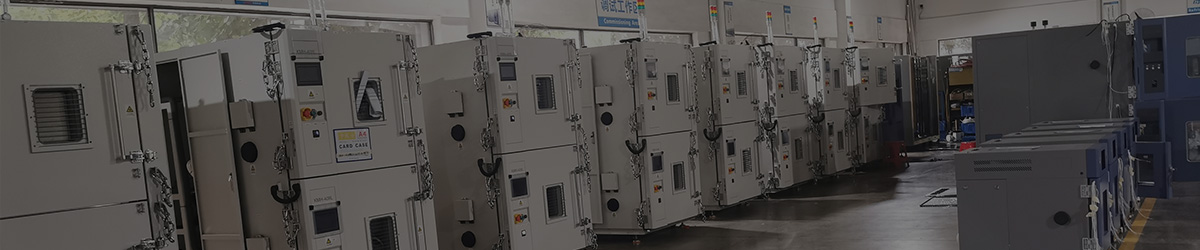
Boards return with delamination and cracked IC packages, even when the reflow profile remains unchanged and the mould compound is the same grade used for years. The root cause is rarely the raw material itself. It is moisture trapped inside the package during storage — and a critical qualification test that should have caught the risk long before the parts hit production.
Plastic encapsulants are hygroscopic. They continuously absorb moisture from ambient air during storage. At reflow peak temperatures near 260 °C, this trapped water vaporises instantly. The rapid build-up of internal vapour pressure exceeds interfacial bond strength, causing package splitting. This failure mode is known as popcorning. Delamination most often initiates at the die-paddle interface and propagates outward under sustained vapour pressure.
Why PCT, and How It Differs From HAST
PCT per JEDEC JESD22-A102 is the fastest screening test for popcorning failure. Test conditions: 121 °C saturated steam (≈2 atm absolute pressure). The saturated steam environment drives moisture penetration into the package within days — a penetration depth that conventional 85 °C / 85% RH testing would take weeks to achieve.
Important distinction: PCT validates structural integrity; it is not a service-life simulation. PCT and HAST are not interchangeable.
- Biased HAST (JESD22-A110): Adds electrical stress to accelerate corrosion and ionic migration.
- Unbiased HAST (JESD22-A118): Uses unsaturated pressurised steam for packages incompatible with saturated steam conditions.
- PCT (JESD22-A102): No electrical bias, no electrical monitoring. It functions purely as a screening test for moisture ingress and delamination risk.
If a datasheet or specification only states “HAST” without the JEDEC clause number, always confirm the standard variant. Chamber setup, bias requirements and acceptance criteria differ substantially between standards.
Two Common Mistakes That Make Test Results Unreliable
- Omitting preconditioning bake Without controlled baking to remove residual moisture, the initial moisture level of samples remains undefined. You cannot distinguish failures caused by moisture absorbed during storage from failures stemming from packages entering the soak cycle with unknown initial moisture loading — rendering the moisture soak step meaningless.
- Running PCT after PCB assembly Package-level PCT qualification verifies whether encapsulant and die-attach materials can withstand reflow. Testing after board assembly evaluates the PCB assembly rather than the bare IC package. Although the visible failure mode appears identical, you lose visibility into the true root cause of package popcorning.
Key Evaluation Crite When Selecting a Chamber
- Stable pressure & temperature under full load: Parameter drift during a 96-hour test invalidates results for the entire batch
- Steam purity and reliable drainage design: Condensate carryover contaminates test samples and accelerates chamber corrosion
- Position-level traceability: Logs must record sample locations and timestamps — not merely confirm the chamber reached setpoint
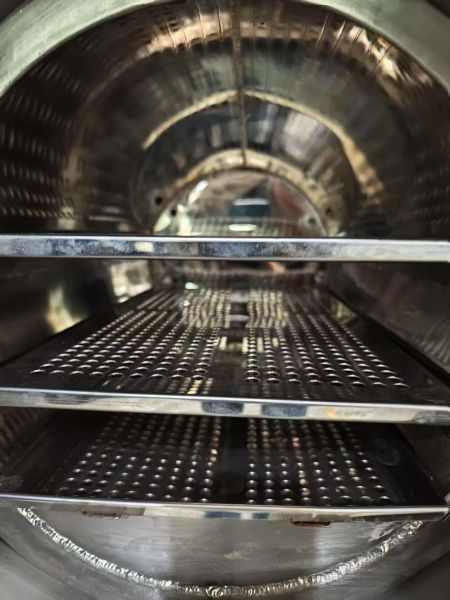
Caption: Internal chamber shelf structure of UP-6125 PCT autoclave, uniform steam circulation for reliable moisture screening of IC packages.
UBY PCT & HAST Test Systems
UBY designs and manufactures PCT and HAST chambers compliant with JEDEC standards:
表格
| Model | Type | JEDEC Reference |
|---|---|---|
| UP-6125 | PCT (autoclave, saturated steam) | JESD22-A102 |
| UP-6124 | HAST — biased & unbiased | JESD22-A110 / JESD22-A118 |
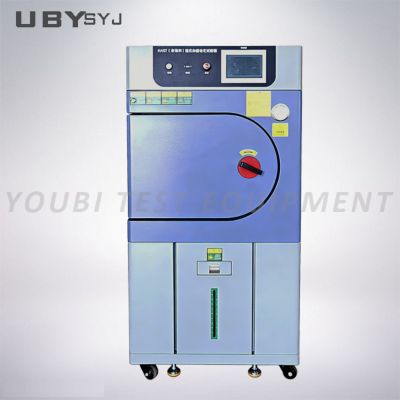
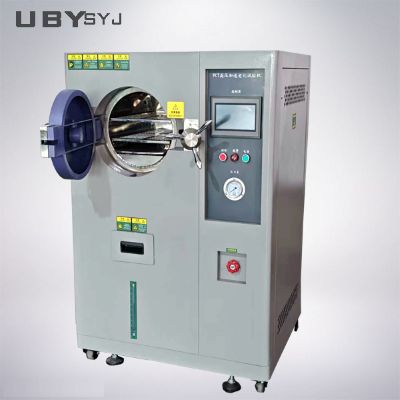
Caption:Left: UP-6124 HAST System; Right: UP-6125 PCT System.
UP-6125 is built for saturated steam PCT screening to evaluate IC package moisture ingress and delamination risk. UP-6124 supports both biased and unbiased HAST tests for accelerated corrosion and ionic migration assessment.
Share your JEDEC specification clause and package outline with us. We will map your requirements to the correct test sequence and confirm whether the UP-6125 (PCT) or UP-6124 (HAST) is the right fit before you finalise your chamber purchase.
Post time: Nov-18-2026